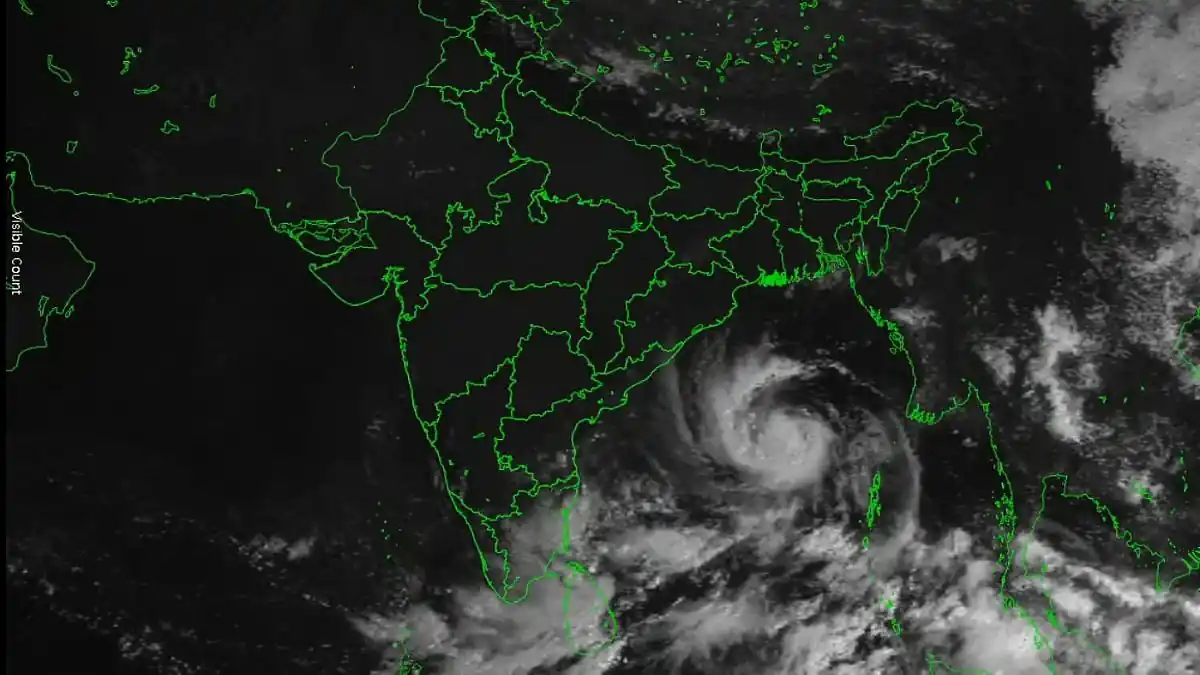
The winds came first, then the rains followed, and finally the cyclone itself on the early morning of Wednesday, October 28.
The cyclone Arnab made landfall on the coastal region of Andhra Pradesh between Bapatla and Visakhapatnam as a "very severe" cyclonic storm. The IMD had indicated that the landfall process took place around 1.20 am.
The maximum sustained winds were 125-135 kmph, with gusts reaching 150 kmph. This was slightly more severe compared to the forecast of 115-125 kmph the previous day.
The cyclone could not remain strong for too long. Arnab came out of the Andhra Pradesh and Yanam coast in the early hours of Wednesday and became weak, and according to the IMD, the landfall process was over, and now the system was over the land.
The very severe cyclonic storm became a severe cyclonic storm after crossing the coast. The agency downgraded the storm. The danger had not passed according to forecasters.
The people and administration will have to stay alert till evening, said the authorities.
Initial reports have been cautiously optimistic. As yet, there have been no deaths or destruction of infrastructure facilities reported.
This is only true for the first few hours after the disaster. Assessments will be made later on, and the numbers may vary.
It was also observed that the main impact of the cyclone was the strong winds and not flooding. There was little rain in Kakinada.
The damage caused was tangible but not extensive. According to Kakinada Superintendent of Police G. Bindu Madhav, the cyclone has caused about 500 trees and less than 100 electricity poles to be uprooted in the district.
The police official said that the road from Uppada on the coastal side is all washed away. It is one of the most vulnerable parts of the coastline in the state.
Superintendent Amit Bardar in Alluri Sitarama Raju district said that as of 9 am the damage is only limited to uprooting of trees and electricity poles and flooding of roads in a few places.
The impacts of Arnab were felt well inside India. Some schools remained shut in areas of Jharkhand until October 29.
The aviation industry also took measures. The Ministry of Civil Aviation had a review meeting to assess the impact of the cyclone after the IMD forecast that the storm would grow in intensity.
Forecasters had predicted that heavy rains would occur in the states of Odisha and Chhattisgarh due to the movement of the storm towards the northwest direction.
The coast of Andhra Pradesh has faced many cyclonic disasters since the beginning. In November 1996, an extremely severe cyclonic storm hit the area roughly 50 kilometers south of Kakinada, destroying 647,554 houses in the state, out of which more than 10,000 were completely destroyed.
The cyclone of 1990 caused deaths of 967 individuals. Fewer people lost their lives due to the thorough preparation.
Later on, in October 2018, Cyclone Titli struck the coastline again. This time, 300,000 people were evacuated, and the intensity of the storm was considerably reduced after the landfall.
Wednesday's initial statistics indicate that the evacuation measures proved fruitful. The government of Andhra has taken out the people living in vulnerable zones and held back fishing boats in harbors.
However, that is not to say that the threat has been fully eliminated. Weakened cyclones can still cause floods, and swollen rivers caused by rainstorms can still surge post wind subsidence.
The government will now survey agricultural lands, electric power lines, and country roads. The farmers in the coastal strip will suffer the most damage.