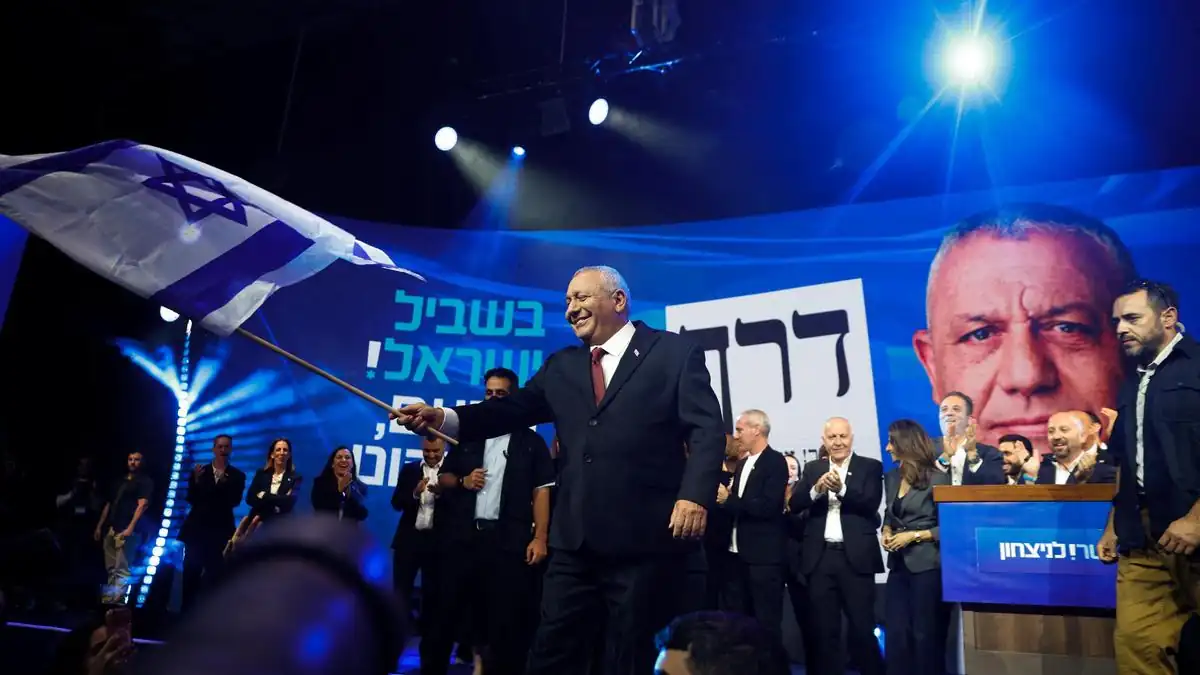
The citizens of Israel were in huge numbers lining up to cast their ballots in the first elections since the Hamas attacks of October 7, 2023, on Tuesday, October 27. The night closed with the screens showing a split down the middle country.
The participation stood at 77.7%, the highest since 1999, according to election authorities.
In other words, what the initial figures reflected was a deadlock.
The exit polls indicated a slight victory by the opposition bloc under Gadi Eisenkot over the Likud bloc led by Prime Minister Benjamin Netanyahu without either of them attaining the majority vote.
This was supported by all the three major networks. According to Channel 12, Netanyahu will receive 50 seats from his right wing and religious bloc, 52 from the opposition bloc, and 18 from the two predominantly Arab blocs.
In order to form a government, one requires 61 out of the 120 total number of Knesset. According to Media Line, Netanyahu's bloc was eleven seats shy, while the opposition cannot form a government without more seats.
The breakdowns of the parties paint a more complex picture. Channel 12 handed Netanyahu’s Likud 24 seats, the highest total for any one party. Eisenkot’s Yashar got 22 seats, and Bennett’s B'Yachad got 12.
This explains why there is a discrepancy between the headline figures. Likud is the largest party, but the opposition bloc is the largest bloc. None of these facts alone form a government.
Exit polls on Tuesday night showed Eisenkot’s bloc leading Netanyahu’s in all three polls.
Among the unexpected surprises is the Arab vote. Polls indicate that there is enthusiasm for parties that represent Arab citizens, which constitute 22% of the country’s population.
According to Ynet news reports, the Arab parties are expected to earn 17 to 18 seats in the Knesset. Channel 13 allocated 10 seats to the Joint List and nine to the Democrats.
These seats will be very important. Should the opposition fail to get the required 61 seats, the issue of reliance of the government on Arab parties will be very important.
The first image could not be sustained. The revised exit polls indicated that Netanyahu's bloc was leading with 51 seats, whereas that of Eisenkot was leading with 50 seats.
According to Ynet, the outcome of the election indicated a substantial difference from the final pre-election polls, which indicated that the party of Eisenkot was leading the Likud Party.
Exit polls are always predictions and not final figures. The true numbers would take time before they are known after tallying the votes.
Both sides talked fast. The Foreign Minister Gideon Saar told the press that the joy of the opposition camp was “premature.”
But Eisenkot took a step further in his statement, saying that the results of the polls show “an absolute lack of confidence” in Netanyahu and his government that bears responsibility for October 7 in most of the Israeli citizens.
The road ahead is far. The outcome sets the scene for a period of maneuvering to create a government. It also brings up the chance of another deadlock.
Other smaller parties count as well. Both exit polls forecasted that three smaller parties would not be able to clear the electoral threshold. The wasted votes might affect the total number of seats won.
This is not new to Israel. In recent times, elections have not delivered a definite winner, with negotiations on creating coalitions taking time.