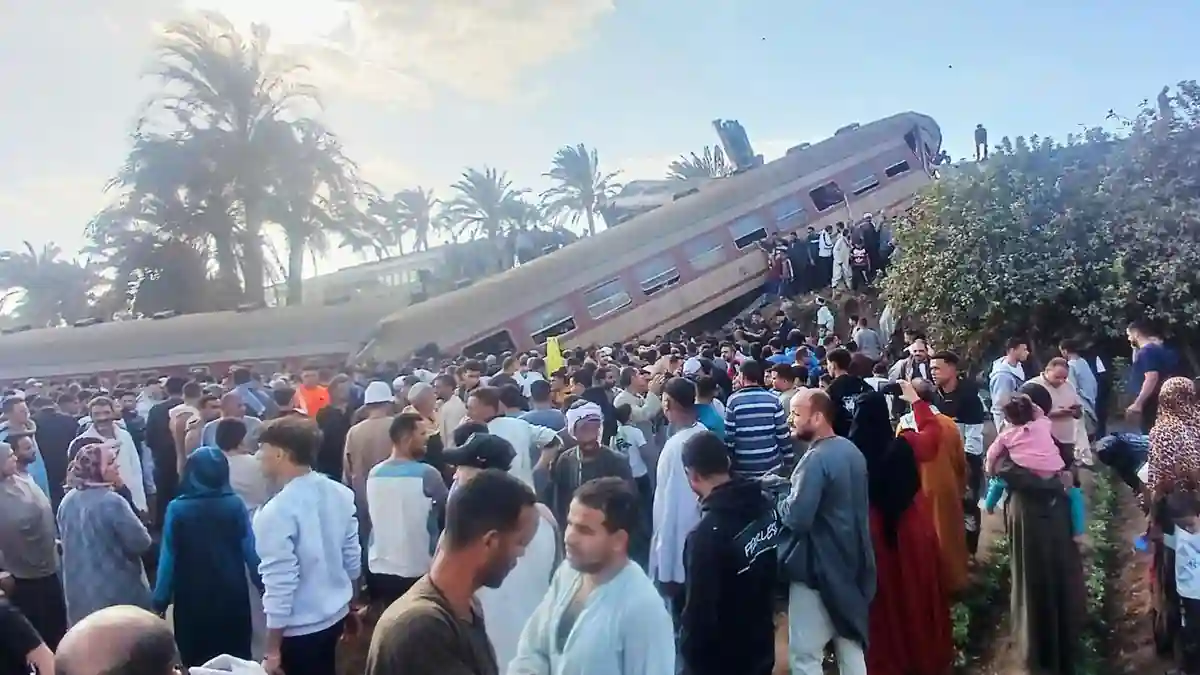
Seven people died on Sunday when two passenger trains collided in al-Ayyat, a district of Giza province roughly 52 kilometres south of the capital. The impact came between Kafr Ammar and Al-Raqqa stations.
According to Egypt's Transportation Ministry and the railway authority, a train heading to Fayoum ran into the rear of another service travelling south from Cairo toward Aswan. Prosecutors who inspected the site later said the Aswan-bound train was not moving. It was standing on the same track, facing the same direction, and the Fayoum train struck its final carriage.
Several carriages came off the rails. Some reports describe them going down an embankment. Reuters, citing the railway authority, said one carriage ended up on its side and a fire broke out in the rear one, though it was later extinguished.
Before the cranes and the official convoys, it was people from nearby Kafr Girza who reached the wreck.
Ayman Gamal, who lives there, told the Associated Press that neighbours ran to the tracks, dragged survivors out and phoned for ambulances. By his count, around 80 injured passengers were taken to nearby hospitals. Some people were trapped inside a carriage of the stationary train. They were dead when rescuers got to them, he said.
Another local witness, Reda Kamel Labib, criticised how long help took to arrive and blamed poor transport infrastructure around the area.
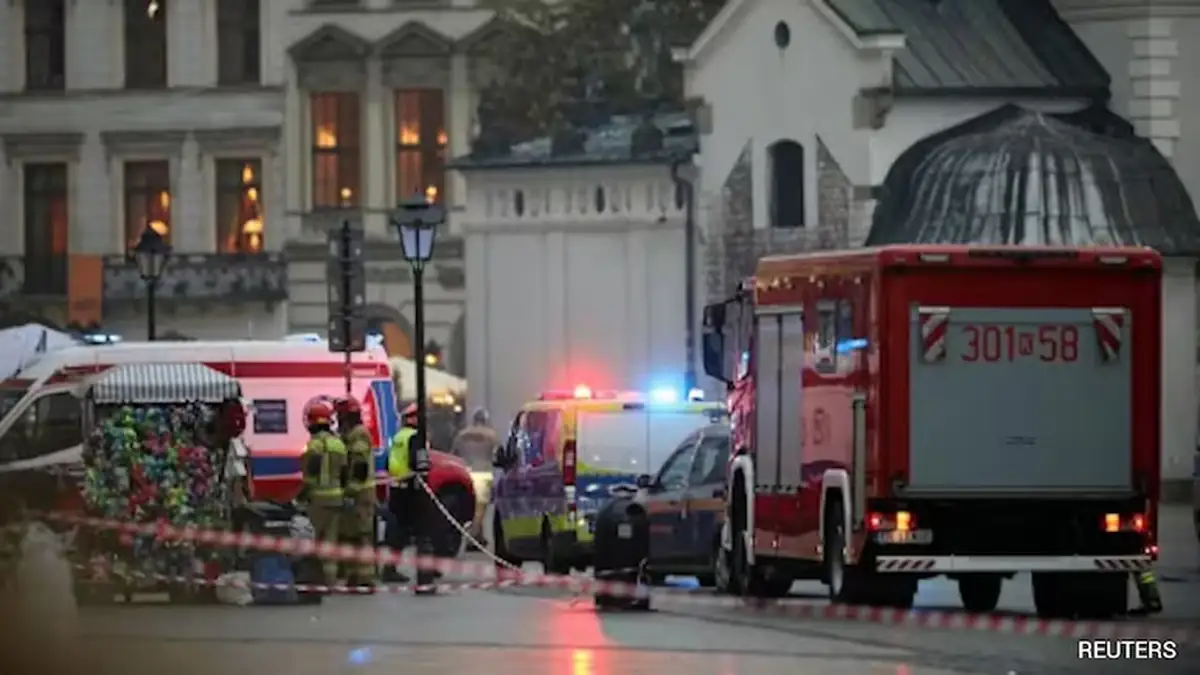
Emergency teams and heavy cranes were later sent in. Egypt's health minister was monitoring emergency and medical services, the ministry said.
The first official figures were lower. Early on Sunday the Health Ministry reported four dead and 88 injured, and some outlets ran with that for hours. State media had spoken of 120 wounded without saying how badly.
By the evening the ministry had moved to seven dead and 112 injured. Reuters and The Washington Post carried 125. The Chief Prosecutor's office, in its own statement, said seven were killed and more than 100 hurt, and added that a member of the train crew was among the victims.
So the safest reading is this: seven confirmed deaths, somewhere between 112 and 125 injured. Nobody has said how many of the injured are in serious condition, and that number matters for whether the death toll holds.
President Sisi said he was following events "with great concern" and sent condolences to the families of the dead. He directed the authorities to investigate and to hold anyone found negligent to account.
Prosecutors said their investigators reached the site on Sunday night. That is where the real question sits. A moving train and a stationary one ended up on the same track, and the investigation has to explain how.
Politically, the crash is already costing someone. Calls for Egypt's transport minister to resign surfaced on Sunday, driven by how often these accidents recur. The railway authority has not said when services between Giza and the south will return.
Al-Ayyat is not a name Egyptians hear without a pause. The country's deadliest rail disaster happened here in February 2002, when a fire swept through a Cairo-to-Luxor passenger train and killed more than 300 people. Two further accidents in the area in 2009 took dozens of lives.
It has not been quiet recently either. Last September, two freight trains collided in the same district. A driver and his assistant were injured in that one.
Egypt has put billions of dollars into transport over the past decade: new highways, high-speed rail projects, announced modernisation drives for the railways. Much of the ageing conventional network, the one ordinary commuters actually ride, has not been overhauled.
The system has a long record of mismanagement and poor maintenance of equipment, as the Associated Press put it, and derailments and crashes are common.
What Sunday adds to that record is a rear-end collision involving a train that was standing still. Investigators will want to know why the moving train was allowed onto that stretch, and whether the failure was human, mechanical or procedural. None of that has been established.
For now, the line is shut, the cranes are working, and the numbers may still move.