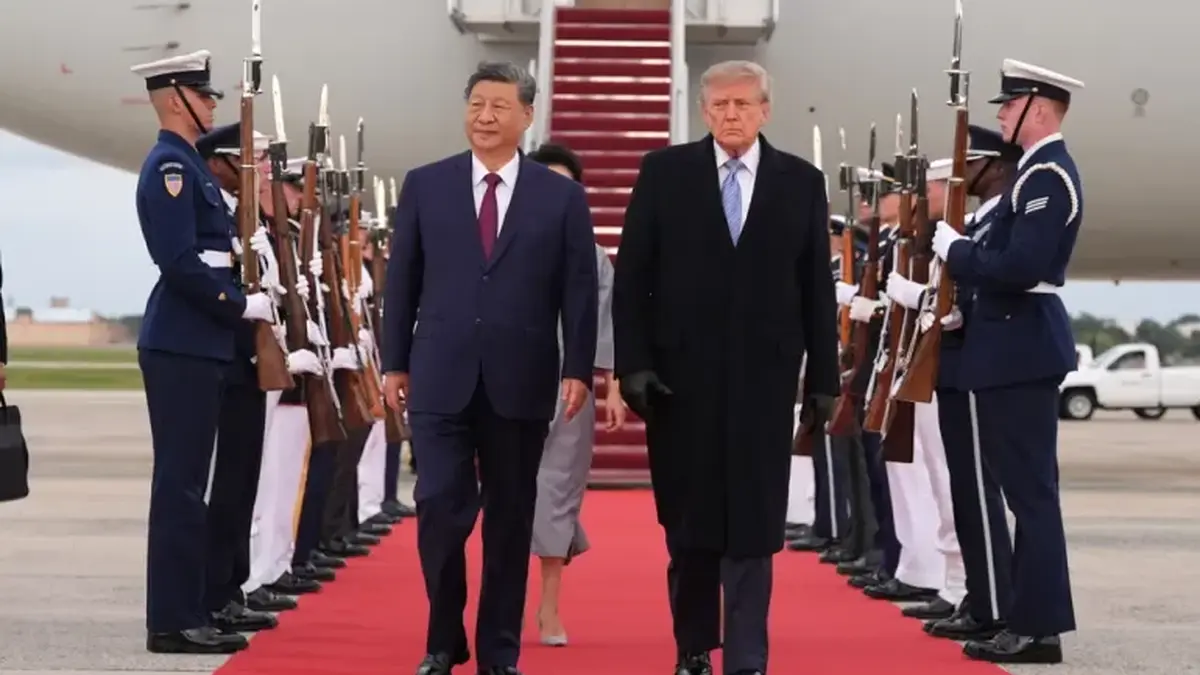
Xi Jinping walked into the White House on Wednesday for the first time in more than ten years, capping off a state visit Trump had been talking up for weeks as "very exciting." It's the second meeting between the two leaders this year, following Trump's own trip to Beijing back in May, and this one came with all the trimmings: a planeside welcome at Joint Base Andrews that aides called a rare gesture, a military review in the Rose Garden complete with a B-2 flyover, and a state dinner on the schedule too.
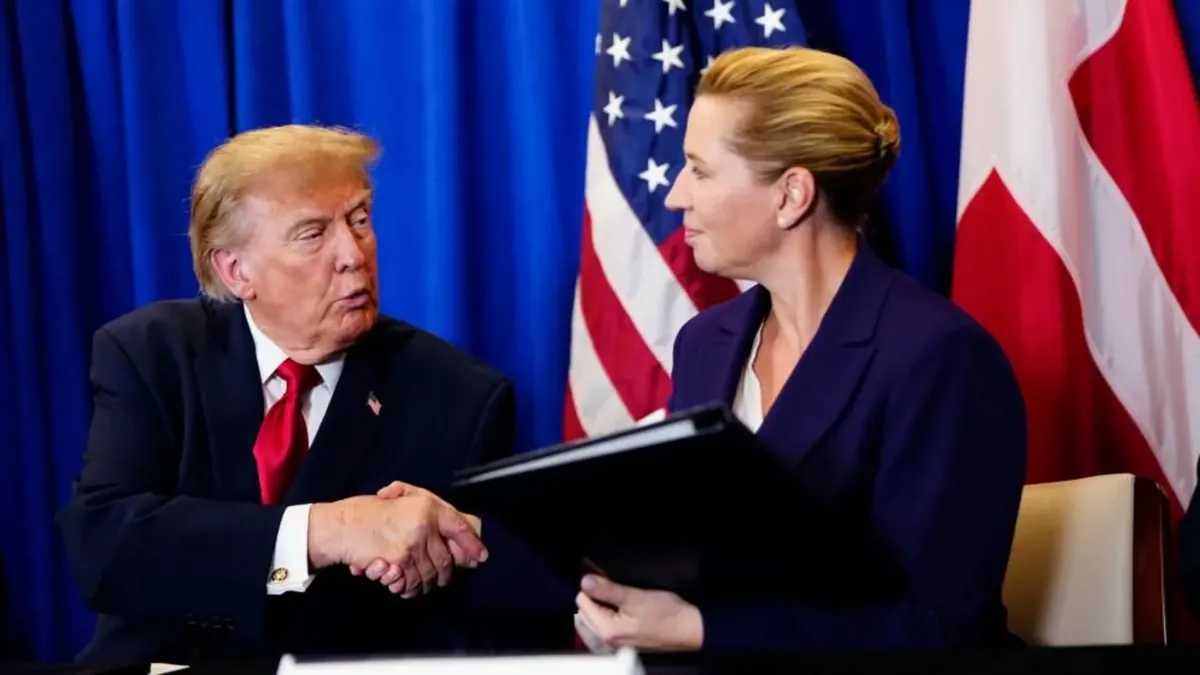
Trump didn't hold back on the warmth. "President Xi and I have forged a friendship, a truly great friendship," he said as he welcomed Xi and First Lady Melania Trump alongside Madame Peng Liyuan to the White House grounds.
Xi's own opening remarks landed a little differently.
Even as the honor guard rehearsed and the new White House helipad got its debut, Xi arrived with a warning attached. Multiple outlets picked up on a line from his opening remarks suggesting both countries would lose in any confrontation, a pointed reminder that the friendly optics sit on top of a relationship still strained over Taiwan, trade and technology. He also called on both nations to treat each other as partners rather than rivals, according to reporting from the summit.
That tension between the handshakes and the substance has basically defined the runup to this meeting. China's economy is on pace to post a trade surplus north of a trillion dollars for the second year running, and Trump, dealing with low approval numbers and a war in Iran still unresolved, wanted something concrete he could point to back home.
The headline item is the tariff truce, first struck after a Trump-Xi meeting in South Korea last October and due to expire November 10. Treasury Secretary Scott Bessent confirmed the two sides had agreed to extend it, this time through January 10. That buys both economies several more months without a return to the triple-digit tariffs that rattled global supply chains earlier in Trump's term.
Beyond trade, the agenda covered AI governance, a topic both governments have framed as urgent given how fast the technology is moving, along with Iran and Taiwan. Xi told reporters that the US and China carry what he called a historic responsibility to guide AI development so it stays under human control. There's also a newer piece of architecture behind the scenes: a US-China Board of Trade and a companion Board of Investment, set up after May's Beijing summit, meant to manage trade in non-sensitive goods on an ongoing basis rather than leaving everything to periodic tariff fights.
Trade Representative Jamieson Greer had signaled ahead of the summit that announcements on agriculture and non-tariff barriers were likely, tied to an agreed reduction covering roughly $30 billion in goods, the kind of thing China could deliver fairly easily by easing up on US farm imports.
Not everyone's convinced much will actually change hands. Jonathan Czin at the Brookings Institution said before the meeting that he didn't expect much to come out of it, calling it likely to echo the May Beijing trip, where the real focus was the rapport between the two men rather than any specific deal. That read holds up so far. Nothing announced Wednesday counts as a breakthrough so much as a continuation, more truce than treaty.
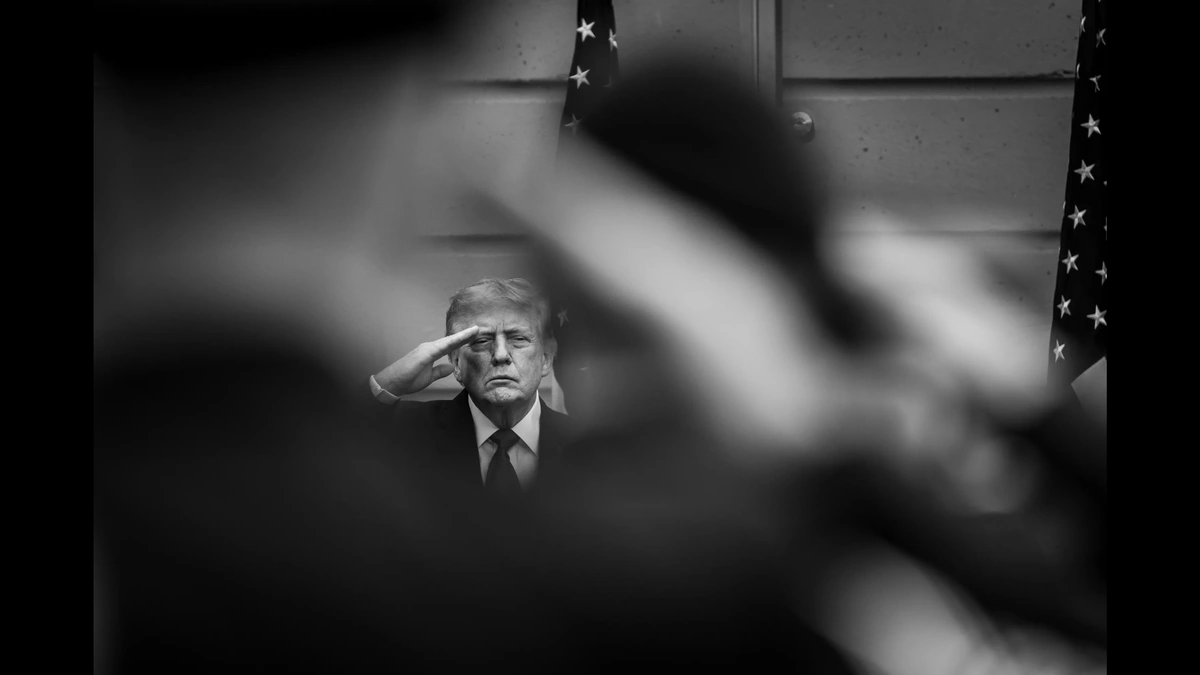
Back home, the reception's been mixed. Reporting out of Capitol Hill described loud criticism of the warm welcome even as it played out, and a clip of Trump appearing to wince during the military flypast circulated widely enough to become its own minor story. Xi wasn't spared the internet's attention either; a pair of gloves he wore at the Andrews greeting somehow became a talking point on social media within hours.
The state dinner caps off the visit, and both sides are expected to keep talking through the Board of Trade mechanism in the weeks ahead rather than treat this as a one-and-done summit. The truce now runs through January 10. Whether it turns into something more durable, or just becomes the next deadline everyone watches nervously, is the open question heading into 2027.
Trump hosted Xi Jinping at the White House on September 24 for Xi's first visit there in over a decade their second meeting this year after Trump's May trip to Beijing. The day was heavy on pageantry: a rare tarmac welcome at Joint Base Andrews, a Rose Garden military review with a B-2 flyover, and a state dinner, with Trump calling it a "truly great friendship." Xi struck a more pointed tone, warning both sides would lose in any confrontation and calling for AI development to stay under human control.
On substance, the two sides agreed to extend their tariff truce through January 10, alongside talks on AI governance, Taiwan, and Iran, building on the "Board of Trade" framework set up after May's Beijing summit. Analysts like Brookings' Jonathan Czin were skeptical going in, expecting the summit to echo May's rapport-heavy trip rather than produce real breakthroughs a read that largely held. Side stories included Capitol Hill criticism of the warm reception, a viral clip of Trump wincing during the flypast, and Xi's gloves becoming an odd talking point online.