
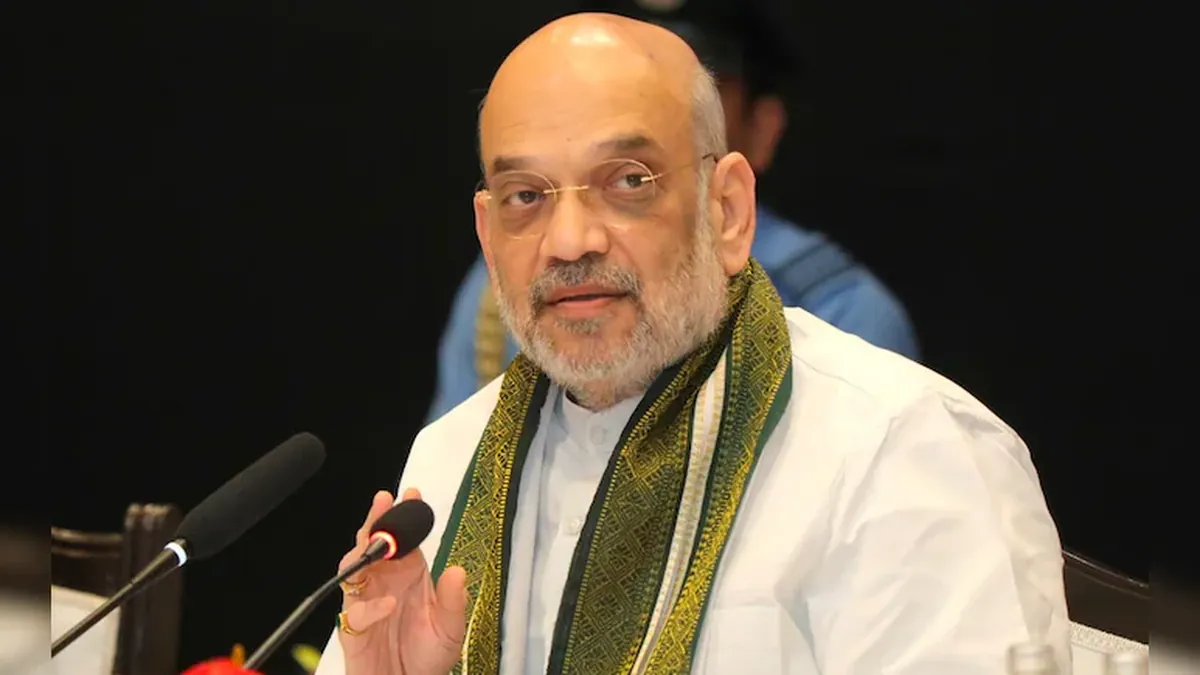
The visit of Mr Amit Shah to Arunachal Pradesh should have been about the issue of security, policing, and border areas. But the mega dam project continued to intrude into the discussion.
Speaking to the protestors in the Siang valley region, Union Home Minister Amit Shah said in an address on Saturday that the Siang Upper Multipurpose Project would come through only after consultations and dialogues with the locals taking into account their cultural sentiments.
One day later in another address, he went on to talk about the border with China.
Shah reported that the villagers were returning to their villages on Sunday, November 22. "I am happy that people have started coming back to all the 40 villages (which share borders with China) and that population has grown while migration has stopped," he added.
These successes are attributed to the centre's programmes. He said that the government had given them employment and healthcare services in those areas. None of the sources mentioned census figures, village names or surveys in support of his statement.
His visit brought some announcements. Shah has initiated 199 projects valued at ₹110.95 crore through the Vibrant Villages programme in 11 border districts of Arunachal Pradesh. Mobile clinics were also deployed to the villages of 11 districts on the same day.
He also talked about a procurement regulation. The ministry of Home Affairs has directed that ITBP and the Army must purchase their requirements from village cooperatives, and not from Tezpur or Guwahati.
Vibrant Villages Scheme came into existence in April 2023. This scheme selected 2,967 villages from 46 blocks of 19 districts in the northern part of India for all-round development, out of which 662 villages have been selected in the first phase, including 455 villages from Arunachal Pradesh. The objective of this scheme is to induce people to live in their native villages.
The Siang Upper Multipurpose Project is one of the controversial projects in the Northeast. The 11,200 MW project, if constructed, will be the largest in India. It will help meet the challenge created by the construction of a 60,000 MW project being built by China on the upper reaches of Siang, called Yarlung Tsangpo in Tibet.
The Siang Upper Multipurpose Project is a strategically important project which is essential for the development of Arunachal Pradesh. The project is also necessary for the development of the state and energy security of India. Shah assured the Centre's commitment to safeguarding the Adi culture and tradition.
The opposition has remained firm. The Adi Bane Kebang United, the highest body of the Adi community, along with the Siang Indigenous Farmers' Forum, have issued a joint memorandum to Shah demanding that there should be no construction of any dam on the Siang.
This was based on the argument that the project would have the maximum impact on the Adi community, and the concept, which dates back around 45 years, has already been rejected twice before by the state government due to people’s opposition.
Furthermore, on Friday, the bodies also put certain preconditions. This included agreeing to hold discussions provided equal treatment. Their stand is that discussions cannot take place under any pressure.
The history of this project is one of conflict. In an earlier incident, the people burnt down a suspension bridge to prevent the entry of the central security forces into the Begging village, where the NHPC was carrying out a pre-feasibility study. An anti-dam activist was also charged with violation of prohibitory orders by a deputy commissioner during a protest.
This memorandum is also concerned about the manner in which the protests have been handled. There is no mention of any response to the accusation in the reports reviewed.
The strategic argument hinges on the water element. Based on calculations done by Delhi, the Chinese dam has the potential to divert as much as 40 billion cubic meters of water from the river to China, compared to only 14 billion cubic meters of water which will be available for storage from the Upper Siang project.
The Chief Minister of Arunachal, Pema Khandu, has referred to the Chinese dam as a "ticking water bomb" for the state of Arunachal. These are the government's figures and the opinions of the chief minister, and no comments from China have been made.
Common to all Shah’s discourses is the fact that the Centre uses the border as an area to settle and consolidate.
The villages programme deals with out migration, while the dam project deals with the river that is being altered by China upstream.
However, for the Adis, the same politics of the border means the loss of land, since, according to the locals, the dam will inundate at least 27–55 villages.
Several issues remain unclear. The Centre has made promises of consultation, while the protest groups have established preconditions for the discussion process. There has been no mention of any planned meetings within the reviewed reports.
Moreover, there has been no information on the resumption of pre-feasibility study or how the term "consent" will be defined in practice. It will clarify whether Shah's promise represents a new direction or a reiteration.








Comments 0