
Thursday was all about turkey and traffic. It turned into a day of outage map gazing.
A major storm barreled up the East Coast and parked itself over the busiest travel stretch of the American year. rain came in sideways Down came trees. Hundreds of thousands of homes and businesses were without power by afternoon, and many Thanksgiving dinners were being finished in the dark or not at all.
The National Weather Service called it a “multi-hazard” system. “The real concern was coastal flooding and the wind and heavy rain stacked on top of it,” meteorologist Richard Bann of the agency’s Weather Prediction Center told NPR.
The numbers vary depending on whom you ask and when. Reports from Reuters put the number of customers without power above 836,000. The Times of India reported over 900,000, and USA Today surpassed a million as the day wore on. Outage numbers change from minute to minute, so think of them all as snapshots.
At the state level, the picture was clearer. Poweroutage at 2:26 p.m. ET.us left nearly 200,000 homes and businesses without power in Virginia and another 177,000 in Maryland. Tens of thousands of customers lost power in each of Pennsylvania, New Jersey and North Carolina.
Most of the damage was done by wind. Gusts of 50 to 70 mph were reported or forecast across Virginia, Maryland, Delaware, New Jersey, New York and coastal New England. By the afternoon, winds at New York City's LaGuardia Airport were blowing at 56 mph. Utilities had been warning for days that wet ground and strong winds were a bad mix as trees lost their grip in soggy soil and fell into lines.
Air travel took a hit. By midday Thursday, FlightAware had recorded more than 400 US flights canceled and around 1,600 delayed. The hardest-hit areas were Washington and New York. Later figures from India Today put the delays at about 1,800.
Roads were no different. In parts of the East Coast, authorities told people to stay inside. That's a tall order on a holiday when AAA expects 81.5 million Americans will be traveling between Thursday and Monday. Most are driving, though, and rain-soaked highways with low visibility are not where anyone wants to be on Thanksgiving.
The wind was only half of it. The storm happened during king tides, the unusually high tides that occur when the sun and moon are aligned, and the National Weather Service said strong onshore winds pushing against them were flooding low-lying communities along the coast.
The picture spread town by town through local coverage. Roads were flooded in Jersey Shore locales like Sea Isle City and Manasquan, and a dune breach was reported along Route 1 at the Delaware beaches. At one point, some 67 million people were under coastal flood alerts, Yahoo News reported.
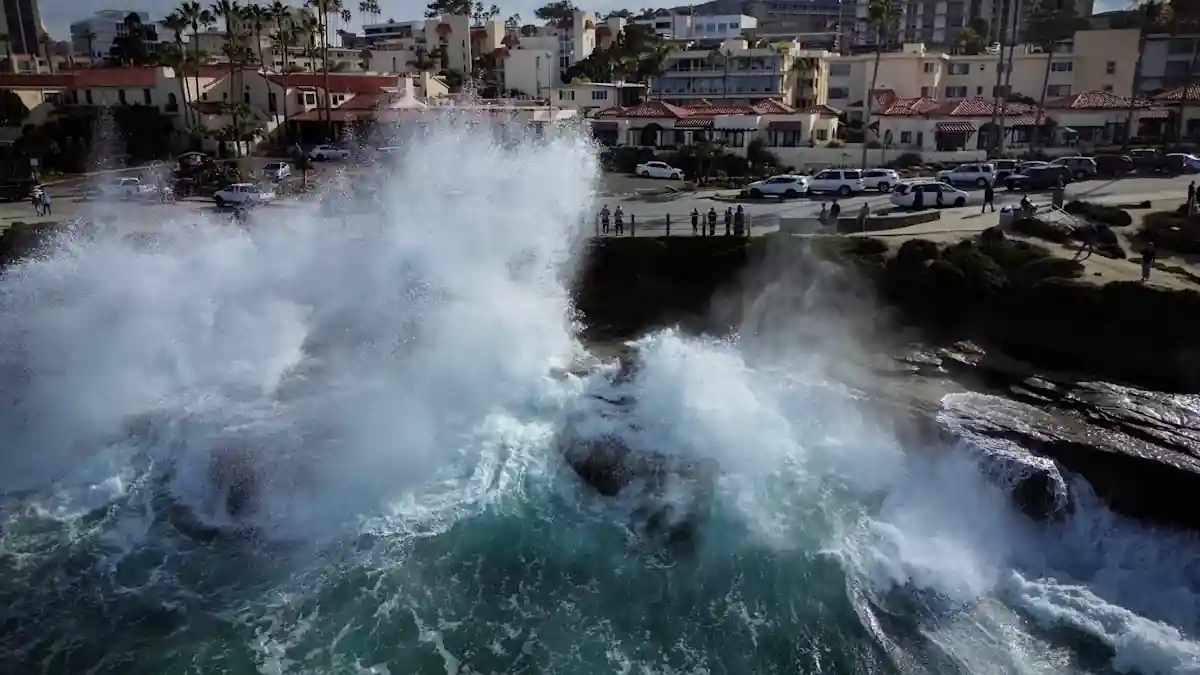
Neither was the East Coast. King tides on the other side of the country flooded streets along the California coast and knocked part of the Pacifica Pier into the water, prompting evacuation warnings. Snow was expected in parts of the Midwest.
And then there was the parade.
New York Mayor Zohran Mamdani on Wednesday delayed Macy’s 100th Thanksgiving Day Parade, even as crews were already inflating the giant balloons. The new date is Saturday, Nov. 28 at 8:30 am. Eastern. It’s the first time in the parade’s 100-year history that it won’t run on Thanksgiving itself. It was canceled in World War II but has never been moved.
The city was expecting sustained winds of 30 to 40 mph, with gusts up to 65 mph, and flash flooding. “Safety has to be first,” Mamdani told reporters, admitting the change would inconvenience families who had planned around the day.
It’s taken two years to organize the event, organizers say. It included more than 11,000 participants and volunteers, thousands of high school band members from across the nation, hundreds of balloon handlers, and a record 100 inflatables were planned. For its part, Philadelphia made its own call and grounded all balloons for its parade because of wind.
“The size of this storm for the time of year is unusual, it's the kind of thing you would normally expect in deep winter,” Matthew Cappucci, a meteorologist with the Washington Post, told NPR. That helps explain why so many utilities and cities seemed to be flat-footed by how many things were happening all at once: wind, rain, tides, travel.
New York declared a state of emergency ahead of the storm, ABC News reported. The four major US airlines had already issued travel waivers for East Coast hubs earlier in the week, Forbes reported. ## What’s next
The short term outlook is improved. The storm is expected to move out overnight into Friday, the National Weather Service says, and the East Coast should be mostly clear by Saturday, which should help people returning home after the long weekend, NPR reports.
Cleanup will take more time. Crews said hundreds of thousands of customers still need power restored, fallen trees cleared and flood damage dealt with along the shore. Stranded travelers can expect knock-on delays at airports all weekend as airlines reposition planes and crews.
At least one date to mark on the calendar for New Yorkers. Balloons are being blown up Saturday morning.







Comments 0